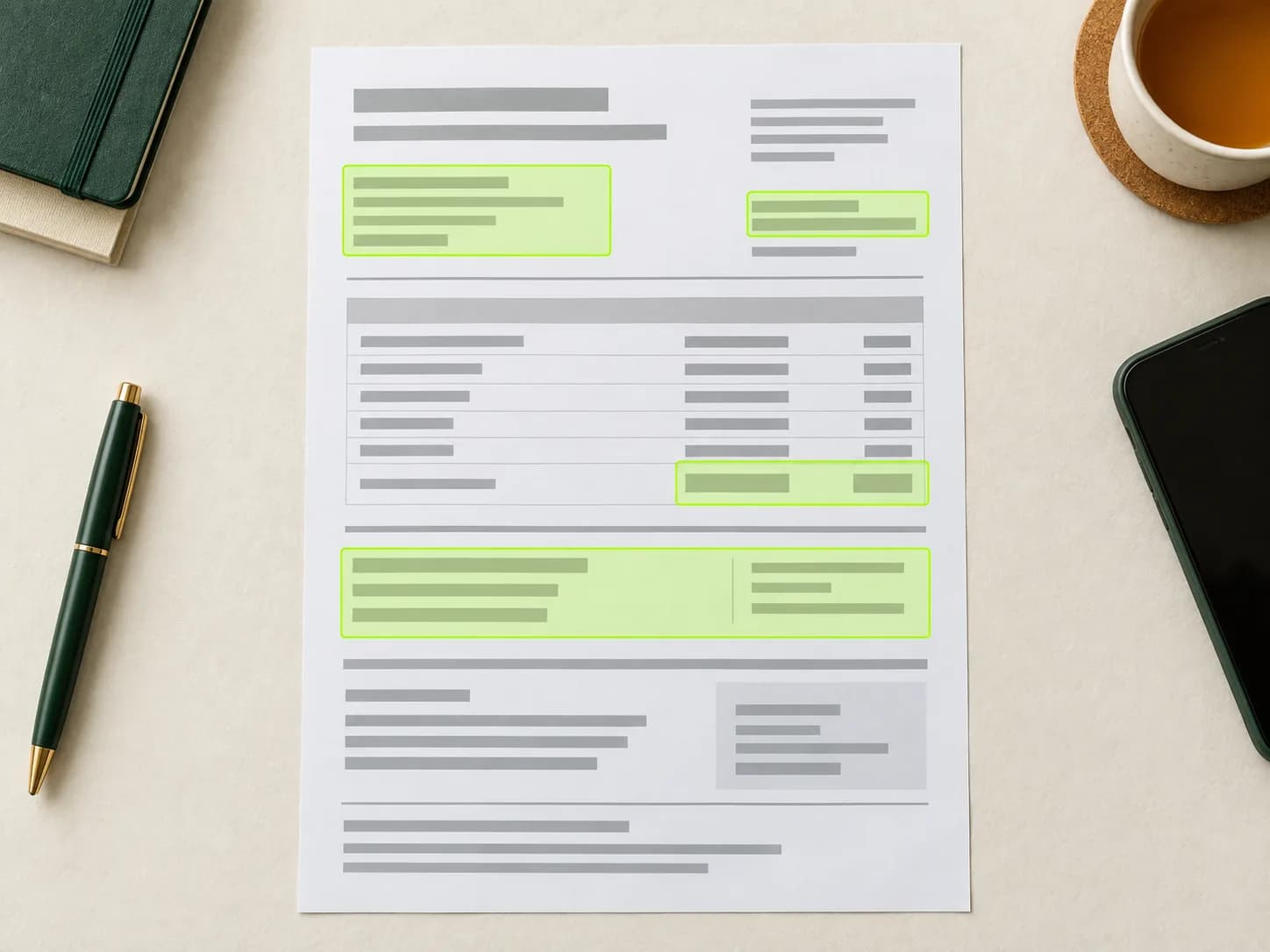
Match the meter number first
Before comparing any readings, match the meter number printed on your bill with the number on the physical label of your meter. They must agree. If they differ, do not pay the bill until you have spoken to your distribution company — you may be receiving another account's bill. The meter number is separate from your reference number and is used only for identification of the physical device.
Previous and current readings
For a straightforward single-register cumulative kWh meter, the units billed in a period equal the current reading minus the previous reading. For example, if the current reading is 1,250 and the previous is 1,100, the difference is 150 kWh. This is the most common calculation for domestic meters, but it is not universal — see the next section for cases where simple subtraction is insufficient.
When the calculation is more complex
Several conditions make simple subtraction incomplete. A meter multiplier (shown on the bill as 'MF' or 'meter factor') means each unit on the display represents more than one kWh — multiply the register difference by the factor. Time-of-use or two-rate meters record peak and off-peak readings separately; the bill will show both, and they are billed at different rates. An estimated reading (marked 'E' or 'Est') means the meter was not read that month. A meter rollover occurs when the counter returns to zero after reaching its maximum, in which case the current reading will be lower than the previous one — add the meter capacity to the current reading before subtracting.
A reading looks wrong
Record the billing month, both readings and the reading dates from the bill. If it is safe to do so (the display is visible from outside without opening any enclosure) take a photo of the accessible meter display and the serial number plate. Send this evidence through your distribution company's official customer service channel. Keep a copy of everything you send. The company is required to investigate a disputed reading; ask for a complaint reference and a written response.
Common questions
How do I calculate the units used on my electricity bill?
Subtract the previous reading from the current reading shown on your bill. For example, current reading 1,250 minus previous reading 1,100 equals 150 units (kWh). If your meter has a multiplier factor (shown as MF on the bill), multiply the difference by that number to get the actual units billed.
What does 'estimated reading' mean on my electricity bill?
An estimated reading means the meter reader did not record the actual meter reading that month. The company estimates consumption based on previous patterns and bills accordingly. You can request a corrected bill by providing a meter photo with the actual reading to your distribution company. Over-estimates are usually adjusted on the next bill.
My current reading is lower than the previous reading — is this a mistake?
It may be a meter rollover, where the counter resets to zero after reaching its maximum display value (often 9,999 or 99,999). Add the meter's full capacity to the current reading before subtracting the previous reading. If rollover does not explain the discrepancy, report it to your distribution company as a possible meter fault.
Something inaccurate? Report a correction. Do not include private bill details.